The Future of MacBook Keyboards: Beyond Mechanical and Membrane
The Future of MacBook Keyboards: Beyond Mechanical and Membrane
For years, the MacBook keyboard has been a source of both innovation and controversy. From the butterfly mechanism to the more recent scissor-switch revival, Apple has consistently sought to balance typing experience with the demands of thin and light design. But what lies beyond these established technologies? As we look towards future MacBook iterations, a range of alternative keyboard technologies are emerging, promising to reshape the way we interact with our devices.
Editor's pick: MacBook stands & accessories on Amazon → As an Amazon Associate, this site earns from qualifying purchases.
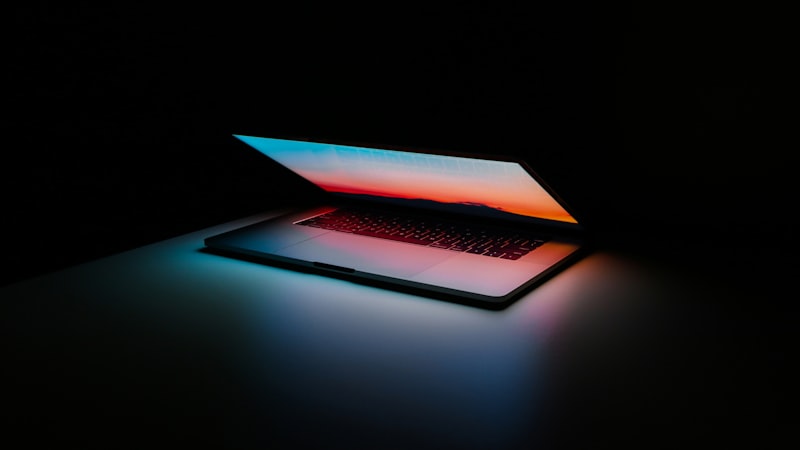
Optical Keyboards: Speed and Reliability
Optical keyboards, already gaining traction in the gaming world, represent one potential direction. Instead of relying on physical contact to register a keystroke, optical switches use a beam of light. When a key is pressed, it breaks the light beam, triggering the actuation. This offers several advantages. Firstly, it eliminates the wear and tear associated with physical contact, significantly increasing lifespan and reliability. Secondly, optical switches can offer exceptionally fast response times, crucial for demanding tasks and gaming scenarios. However, integrating optical switches into the ultra-thin profile of a MacBook presents significant engineering challenges, particularly in power consumption and switch design.
Adaptive Keyboards: Dynamic Customization
Another intriguing possibility lies in adaptive keyboards. These keyboards utilize a dynamic surface, such as an array of individually addressable micro-LEDs or a deformable material, to create keys that can change shape and function on demand. Imagine a keyboard that morphs to display custom shortcuts for different applications, or one that provides haptic feedback to simulate the feel of different key types. While still in the early stages of development, adaptive keyboards hold immense potential for customization and improved ergonomics. Apple has explored such concepts in patents, hinting at a future where the keyboard is no longer a static, fixed element but rather a dynamic, adaptable interface. However, the manufacturing complexity and power requirements for such technology remain substantial hurdles.
Force Touch Keyboards: Pressure Sensitivity and Beyond
Building upon Apple's existing Force Touch technology, a pressure-sensitive keyboard could offer a new dimension of control. Imagine being able to adjust volume or scroll speed based on the pressure applied to a key, or even using the keyboard as a trackpad-like surface for precise cursor control. While this approach might not completely revolutionize the typing experience, it could add a layer of nuanced interaction, particularly for creative professionals. The challenge lies in integrating the necessary sensors without compromising the keyboard's tactile feel and overall thinness.
Material Science: The Next Generation of Scissor Switches
Even without radically new technologies, advancements in materials science could significantly improve the traditional scissor-switch keyboard. Using advanced polymers and precision engineering, Apple could create switches that are even thinner, more durable, and offer a more satisfying tactile feel. Furthermore, as we explored in our analysis of display technology at iPhone View (https://iphoneview.com), advancements in micro-lens arrays could be used to improve keyboard backlighting, offering a more even and energy-efficient illumination.
The Impact on Design and Functionality
Ultimately, the future of the MacBook keyboard will depend on a complex interplay of factors, including technological feasibility, cost, and user experience. Any new keyboard technology must seamlessly integrate into Apple's design philosophy of simplicity and elegance. Furthermore, it must offer tangible benefits in terms of typing speed, accuracy, and comfort. While radical departures from the traditional keyboard are possible, incremental improvements to existing technologies may prove to be the most pragmatic path forward. The ultimate goal is to create a keyboard that is not only functional but also enhances the overall MacBook experience.
Integration with Spatial Computing
As Apple continues to push forward with spatial computing, the keyboard's role may also evolve. Imagine using hand gestures in conjunction with a haptic keyboard to manipulate virtual objects in a spatial environment. The MacBook keyboard could become an anchor point for interacting with augmented reality or virtual reality experiences, further blurring the lines between the physical and digital worlds. This level of integration requires a seamless synergy between hardware and software, further emphasizing Apple's commitment to unified user experience.