A18 Pro in a Laptop: What iPhone Silicon Means for the Future of Mac
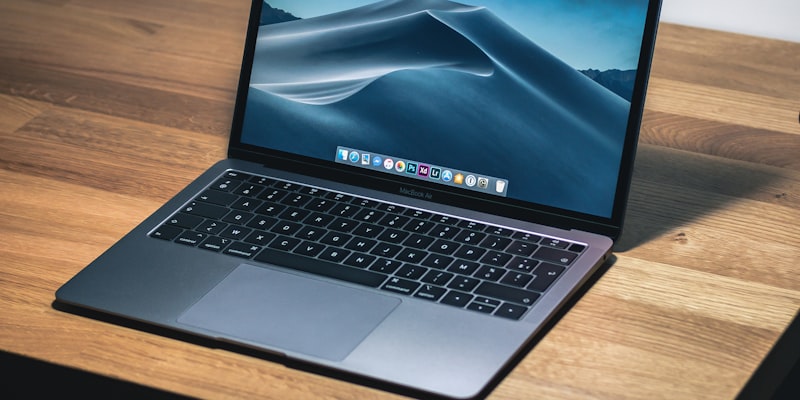
Photo: Unsplash
Editor's pick: MacBook stands & accessories on Amazon → As an Amazon Associate, this site earns from qualifying purchases.
A18 Pro Lands in a MacBook: A Paradigm Shift?
The tech world has been abuzz since Apple's quiet unveiling of the new MacBook Air, powered not by an M-series chip, but by a modified A18 Pro – the same silicon found in the current generation iPhone 18 Pro. While rumours circulated for months, the reality has sparked a debate: is this a glimpse into the future of Mac, or a one-off experiment?
Historically, Apple has maintained a clear delineation between its mobile and desktop silicon. The M-series chips, designed specifically for Mac and iPad Pro, have consistently outpaced their A-series counterparts in raw processing power and graphical capabilities, thanks to increased core counts, wider memory bandwidth, and more aggressive power budgets. So, why the change?
Performance and Efficiency: A Different Equation
The A18 Pro in the MacBook Air isn't simply a transplanted iPhone chip. Apple has reportedly tweaked the design, likely increasing the thermal headroom and allowing for sustained performance beyond what's possible in the constraints of a phone. Early benchmarks suggest the A18 Pro Air sits somewhere between the M2 and M3 in terms of CPU performance, while GPU performance is closer to the M2. This puts it in a compelling position for everyday tasks and creative workflows that don't demand the absolute bleeding edge.
The real win, however, lies in power efficiency. The A-series chips have always been renowned for their incredible battery life, and the A18 Pro MacBook Air is reportedly achieving upwards of 20 hours of real-world use. This is a significant advantage for users prioritising portability and longevity over raw processing power.
Thermal Management: A Balancing Act
Integrating an A-series chip into a laptop presents unique thermal challenges. iPhones rely on passive cooling, dissipating heat through the device's chassis. MacBooks, even the Air models, have traditionally employed active cooling solutions – fans – to maintain optimal performance. The A18 Pro MacBook Air reportedly uses a redesigned passive cooling system, leveraging a larger heatsink and improved thermal paste to manage heat output. This allows for a fanless design, contributing to the device's thin and light profile.
While the passive cooling appears adequate for the A18 Pro's power envelope, concerns remain about sustained performance under heavy loads. Prolonged video rendering or intensive gaming could potentially lead to thermal throttling, limiting performance to prevent overheating. Real-world testing over the coming weeks will be crucial in determining the long-term viability of this approach.
The Future of Mac Silicon: Convergence or Divergence?
The introduction of the A18 Pro in a MacBook raises the inevitable question: will we see more iPhone chips in future Macs? The answer, as always with Apple, is complex.
It's unlikely that Apple will completely abandon the M-series chips. The MacBook Pro and Mac Studio lines cater to professionals who demand maximum performance, and the M-series architecture is still better suited for these workloads. However, the A18 Pro MacBook Air could signal a shift in strategy for the entry-level segment.
We may see future iterations of the MacBook Air and possibly even the base model MacBook Pro powered by tweaked A-series chips, focusing on power efficiency and portability. This would allow Apple to offer a wider range of devices catering to different user needs and price points. Ultimately, the success of the A18 Pro MacBook Air will determine whether this is a temporary experiment or a genuine strategic shift in Apple's silicon roadmap. The next few years will be telling.
Recommended from our network
Questions readers ask
Who is the realistic day-one buyer for a18 analysis?
Enthusiasts and developers buy the first run. Mainstream adoption tracks the second-generation revision, once the rough edges are sanded down and the price comes in roughly $100 lower at the same tier.
Does iOS need rearchitecting to make a18 analysis work properly?
Apple would need a window manager or surface-handling layer in iOS to do this well. The plumbing already exists on iPadOS in a limited form, so the engineering question is less invention and more refinement.
Where is Apple's supply chain on a18 analysis right now?
Reports out of Asia consistently cite a handful of suppliers competing on the relevant component, with Apple splitting orders rather than single-sourcing. That hedging pattern tends to mean a real product is being prepared, not just an R&D exploration.
Is a18 analysis realistic for the next iPhone, or further out?
Most signals point to a later cycle rather than imminent release. Component lead times for a18 analysis suggest Apple is still validating the supply side, and the company tends to wait until yields hit production targets before committing on stage.
In short — what's the takeaway on the future of mac silicon: convergence or divergence??
It comes back to whether Apple can ship a18 analysis without compromising the parts of the iPhone people already pay for. The detail in this section is where that case is made or broken.